What Is Vaping? The Complete Australian Guide

What Is Vaping? The Complete Australian Guide
⚠️ Australia 2027: All nicotine vapes require a TGA prescription. Non-prescription disposables are banned. This article is educational — not medical advice. Call Quitline 13 7848 for cessation support. Do not vape if you are under 18, pregnant, or a non-smoker.
1. Quick summary
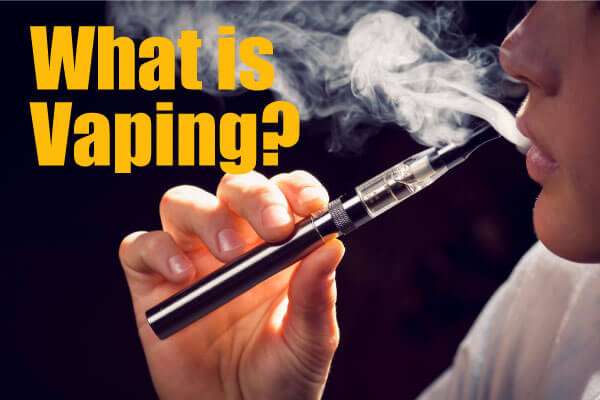
What is vaping? Vaping is the act of inhaling an aerosol produced by heating a liquid (usually containing nicotine, flavourings and a carrier solvent) in an electronic device. The device — variously called an e-cigarette, vape pen, pod system or mod — heats the liquid to between 150 °C and 250 °C, creating a cloud that the user inhales.
In Australia as of 2027, nicotine vapes require a prescription from an authorised prescriber, and non-prescription disposables have been banned since 1 January 2024. This guide is the educational baseline — a complete picture of what vaping is, how it works, and where the law stands.
2. What “vaping” actually means
The word vaping describes both the act and, by extension, the broader category of products used for it. Three technical terms appear regularly:
- Vape / e-cigarette — the device itself.
- Vaping — the act of using the device.
- E-liquid / vape juice — the liquid inside the device.
These terms overlap with ENDS (Electronic Nicotine Delivery Systems) — the formal name used by the World Health Organization and the Australian TGA. ENDS includes both nicotine and non-nicotine devices.
Key distinction: nicotine vapes and non-nicotine vapes are regulated differently in Australia. In 2027, nicotine vapes require a prescription, while non-nicotine products can be sold more freely (subject to state rules).
3. A brief history of vaping
The modern e-cigarette was patented in 2003 by Chinese pharmacist Hon Lik. It entered the Australian market in the late 2000s, originally as a smoking-cessation tool. By 2015, JUUL introduced nicotine-salt pods in the US, and the product category exploded globally.
Australian regulation has tightened in three stages:
- 2021: Nicotine vapes classified as prescription-only medicines.
- 2023: Single-use disposables restricted further under federal reforms.
- 2024: Non-prescription disposables banned outright from 1 January 2024.
In 2027, the regulatory environment is the strictest it has been.
4. How does vaping work?
Vaping devices all share four functional components:
- Battery — typically a rechargeable lithium-ion cell (built-in or swappable).
- Atomiser / coil — a small resistance wire (often kanthal, stainless steel or nickel) wrapped around a wick of cotton or similar material.
- Tank / pod — a reservoir holding the e-liquid.
- Mouthpiece — where the user inhales.
4.1 Anatomy of a vape device
When the user activates the device (either by pressing a button or auto-drawing on some pod systems), the battery sends current through the coil. The coil heats, vaporising the e-liquid in the wick. The resulting aerosol travels up through the mouthpiece and into the user’s lungs.
The temperature range matters: too cool and the liquid doesn’t vaporise; too hot and it can break down into aldehydes (formaldehyde, acetaldehyde) and other thermal degradation products.
4.2 What happens between the device and the user
Three parameters govern the user experience:
- Wattage — power sent to the coil. Higher wattage produces more vapour and warmer aerosol.
- Airflow — how much air is drawn across the coil. Tight airflow mimics cigarette draw (MTL). Open airflow creates larger clouds (DTL).
- Coil resistance (Ω) — sub-ohm coils (<1.0 Ω) produce more vapour; higher-resistance coils (≥1.0 Ω) deliver a tighter draw.
For a deeper dive on airflow and resistance, see our MTL and DTL vaping guide.
5. Types of vaping devices
Vaping devices fall into four main categories. Each suits different user needs.
| Device type | Best for | Coil resistance | Typical user |
|---|---|---|---|
| Cigalike (early e-cigarettes) | First-time switchers | 1.5–2.5 Ω | Now largely obsolete |
| Pod system | Beginners, smokers transitioning off cigarettes | 0.6–1.4 Ω | Adult smokers quitting |
| Vape pen / pen-style | Intermediate users | 0.6–1.5 Ω | Casual daily users |
| Box mod | Experienced users, cloud production | 0.1–0.5 Ω | Hobbyists (AU: prescription required for nicotine) |
In Australia, pod systems dominate the regulated nicotine-vape market, particularly because the 2024 reforms restricted refillable mod sales in some retail channels. For nicotine, always check that a device is supplied via the prescription pathway.
For sub-styles (MTL vs DTL), see our complete MTL and DTL vaping guide.
6. What’s in e-liquid?
E-liquid typically contains four ingredients:
- Propylene glycol (PG) — carries flavour, produces throat hit.
- Vegetable glycerin (VG) — produces vapour, slightly sweet.
- Flavourings — food-grade concentrates (now restricted in many Australian channels to mint, menthol and tobacco).
- Nicotine — optional; in Australia, only present in prescribed formulations capped at 20 mg/mL.
PG/VG ratio matters because it changes the experience:
- 50/50 PG/VG — balanced throat hit and vapour; standard for MTL devices.
- 70/30 VG-heavy — smoother, larger clouds; used for DTL sub-ohm setups.
- High-PG (60+ PG) — used in older-style cigalikes.
For differences between nicotine formats (freebase vs salts), see our freebase vs nicotine salts guide.
Important: Illegal disposables have repeatedly been found by the TGA to contain ingredients not disclosed on packaging — including synthetic cooling agents and unlisted flavour concentrates.
7. Why people vape: benefits and risks
Vaping is not risk-free. Equally, the evidence for adult smokers is more nuanced than pure marketing language suggests. Here’s a balanced view.
7.1 Potential benefits (for adult smokers who switch completely)
- Smoking cessation aid — the 2022 Cochrane review found vaping more effective than NRT for quitting.
- Reduced toxic exposure — vape aerosol contains far fewer toxicants than cigarette smoke (~100 vs ~7,000 chemicals).
- Cost reduction — reusable devices are typically cheaper long-term than continued cigarette purchases.
- No combustion by-products — tar, carbon monoxide and most carcinogens in smoke are absent.
7.2 Documented risks and unknowns
- Nicotine dependence — most regular vapers remain dependent.
- Cardiovascular effects — nicotine raises heart rate and blood pressure.
- Lung irritation — cough, throat irritation and increased sputum have been reported in users.
- Adolescent brain development — nicotine affects the developing brain in users under 25.
- Long-term unknowns — the longest-running cohort studies now span ~10 years; full lifetime risk is still being mapped.
For a deeper dive on the safety and effectiveness of vaping nicotine, see our safety evidence review.
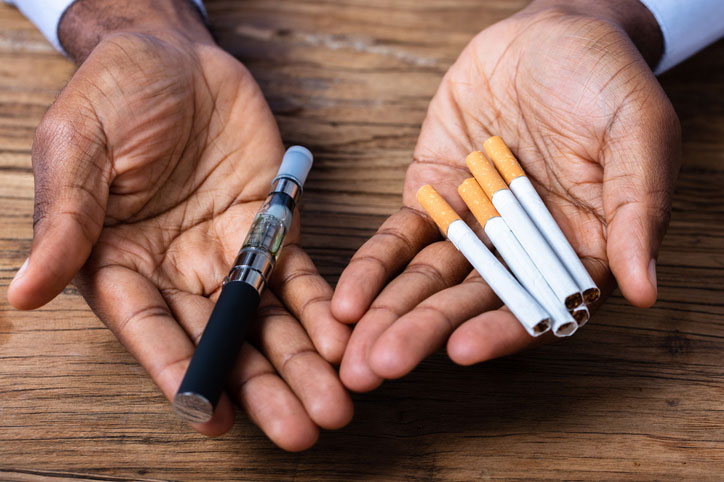
8. Vaping vs smoking: key differences
| Factor | Cigarettes | Vape aerosol |
|---|---|---|
| Combustion | Yes (~900 °C) | No (150–250 °C) |
| Chemicals | ~7,000 | ~100 |
| Known carcinogens | ~70 | Trace / unconfirmed in most formulations |
| Carbon monoxide | High | Negligible |
| Tar | High | None |
| Long-term data | Centuries | ~10 years |
| Risk profile (current evidence) | High | Substantially lower (in adult smokers who switch completely) |
These figures come from a 2022 systematic review by Public Health England and the 2016 Royal College of Physicians report. The “95% less harmful” figure is a relative risk — among adult smokers who completely substitute vaping for smoking.
For non-smokers, neither product is safe.
9. Australian regulations (2027)
Australian nicotine-vape rules are among the strictest in the world. Key points:
- Nicotine vapes require a TGA prescription — see the TGA nicotine vaping hub.
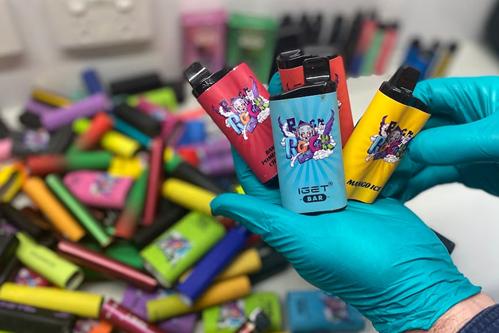
- Non-prescription disposables are banned since 1 January 2024.
- Personal importation is capped at 3 months’ supply under prescription.
- Flavours are restricted to mint, menthol and tobacco in many retail channels.
- State variations apply — Western Australia has additional retail restrictions; check the Department of Health website.
For a deep dive on the disposable-vape ban specifically, see our disposable vapes Australia guide.
10. Who should not vape
- Non-smokers — there is no safe threshold and no health benefit.
- Adolescents and young adults under 25 — nicotine affects brain development.
- Pregnant or breastfeeding people — vaping during pregnancy is not considered safe.
- People with unstable cardiovascular disease — nicotine raises heart rate and blood pressure.
- Anyone under 18 — minimum age in Australia.
If you’re an adult smoker trying to quit, speak with your GP or call Quitline (13 7848) for evidence-based cessation support.
11. Frequently Asked Questions
What is vaping in simple terms?
Vaping is the act of inhaling an aerosol produced by heating a flavoured liquid in an electronic device. The liquid usually contains nicotine, propylene glycol, vegetable glycerin and flavourings. The device heats the liquid to 150–250 °C, producing a cloud that the user inhales.
Is vaping the same as smoking?
No. Smoking burns tobacco at ~900 °C, producing thousands of chemicals. Vaping heats a liquid at much lower temperatures, producing far fewer chemicals. Both deliver nicotine, but the harm profile differs substantially for adult smokers who switch completely.
How does a vape work?
A vape uses a rechargeable battery to heat a coil wrapped in a wick soaked in e-liquid. The heat vaporises the liquid, producing an aerosol the user inhales through a mouthpiece. Three parameters govern the experience: wattage, airflow and coil resistance.
Is vaping legal in Australia?
Yes, with restrictions. Nicotine vapes require a TGA prescription. Non-prescription disposables have been banned since 1 January 2024. Flavour and advertising restrictions also apply. Always check current state-level rules.
What is in e-liquid?
Typical e-liquid contains propylene glycol (PG), vegetable glycerin (VG), food-grade flavourings and, optionally, nicotine. The ratio of PG to VG changes the throat hit and vapour production. Illegal disposables have been found by the TGA to contain undisclosed ingredients.
Is vaping safer than smoking?
For adult smokers who switch completely, current evidence suggests substantially lower risk — the 2022 Public Health England review estimated less than 5% of smoking-related harm. For non-smokers, no form of vaping is safe. See our full safety evidence review.
What are the different types of vape devices?
Four main types: cigalikes (now mostly obsolete), pod systems (most common in Australia), vape pens (intermediate), and box mods (experienced users). Each suits different user needs and produces different vapour output. Beginners typically start with pod systems.
Can non-smokers vape?
No. Non-smokers — especially adolescents and young adults — should not start vaping. Nicotine is addictive and affects brain development in people under 25. There is no safe threshold for non-smokers.
What’s the difference between MTL and DTL vaping?
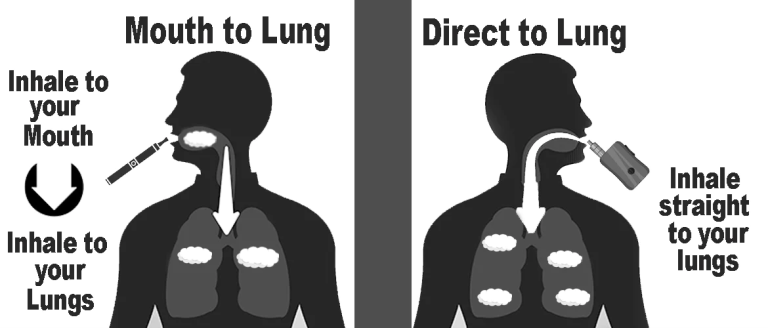
MTL (Mouth-to-Lung) draws vapour into the mouth first, like smoking. DTL (Direct-to-Lung) sends vapour straight to the lungs in one breath, producing larger clouds. They differ on airflow, coil resistance and e-liquid ratio. See our complete guide.
12. References
- Therapeutic Goods Administration (TGA). Nicotine vaping products: information for prescribers. tga.gov.au
- Department of Health and Aged Care. Vaping and e-cigarette control in Australia. health.gov.au
- Office for Health Improvement and Disparities (OHID). Vaping in England: an evidence update. 2022.
- Royal College of Physicians. Nicotine without smoke: tobacco harm reduction. London: RCP, 2016.
- Royal Australian College of General Practitioners (RACGP). Supporting smoking cessation: a guide for health professionals. 2024 update.
- National Health and Medical Research Council (NHMRC). CEO statement on electronic cigarettes. 2023 update.
- Cancer Council Australia. Position statement on e-cigarettes. cancer.org.au
- Hartmann-Boyce J, et al. Electronic cigarettes for smoking cessation. Cochrane Database of Systematic Reviews, 2022.
- Quit Victoria. Quitline information. 13 7848. quit.org.au
Disclaimer: Educational only. Not medical, legal or cessation advice. Always consult a qualified Australian healthcare professional before making decisions about nicotine use or smoking cessation.
Related Articles
Anna • 8 min read
Disposable Vapes Australia 2027: The Complete Safety Guide ⚠️ Australia 2027: Non-prescription disposable vapes are banned under reforms that took effect 1 January 2024. Possession or supply without authorisation can attract civil penalties and criminal charges under state laws. This article is educational. 1. Quick summary Disposable vapes Australia are illegal to sell or supply
Anna • 7 min read
Is Vaping Safer Than Smoking? What the 2027 Evidence Says ⚠️ Australia 2027: Nicotine vapes require a TGA prescription. Most disposables have been banned since 1 January 2024. This article is educational — not medical advice. Call Quitline 13 7848 for cessation support. 1. Quick answer Is vaping safer than smoking? Yes — substantially —
Anna • 4 min read
What is MTL and DTL Vaping? A Complete Australian Guide ⚠️ Australia 2027: Nicotine vaping requires a TGA prescription7Most disposables are banned. This article is educational — not medical advice.Call Quitline 13 7848 for cessation support. 1. What MTL and DTL Vaping Actually Means MTL and DTL vaping are the two main inhalation styles every
Anna • 8 min read
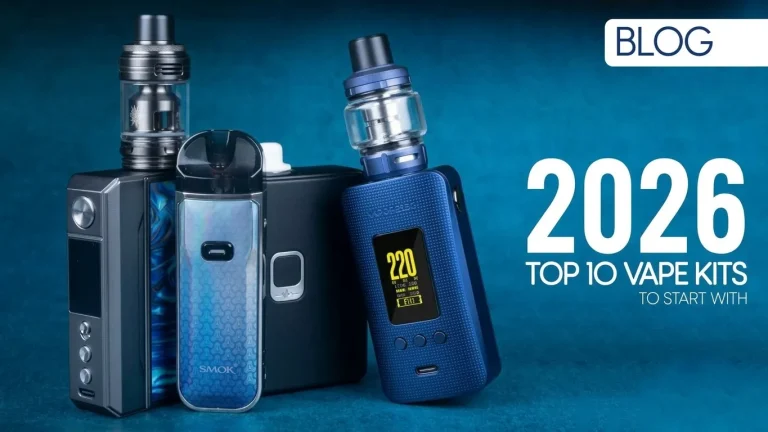
How We Picked the Best Vapes Australia 2026 The original “best vapes of 2023” list focused on refillable pod systems and box mods, but the Australian vaping market has shifted dramatically since then. With the 2026 disposable vape boom and the TGA’s 2024 scheduling changes restricting nicotine e-liquid sales, most adult Australian vapers now reach
Anna • 7 min read
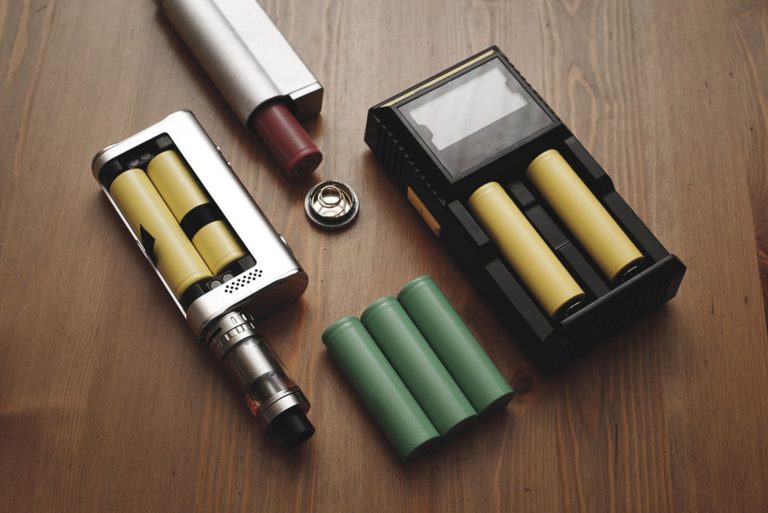
Why Vape Battery Safety Matters More Than You Think Vape battery safety is one of the most overlooked aspects of responsible vaping. While most modern devices include built-in protection circuits, the difference between a safe charging habit and a risky one can mean the difference between a battery that lasts 12 months and one that
Anna • 6 min read
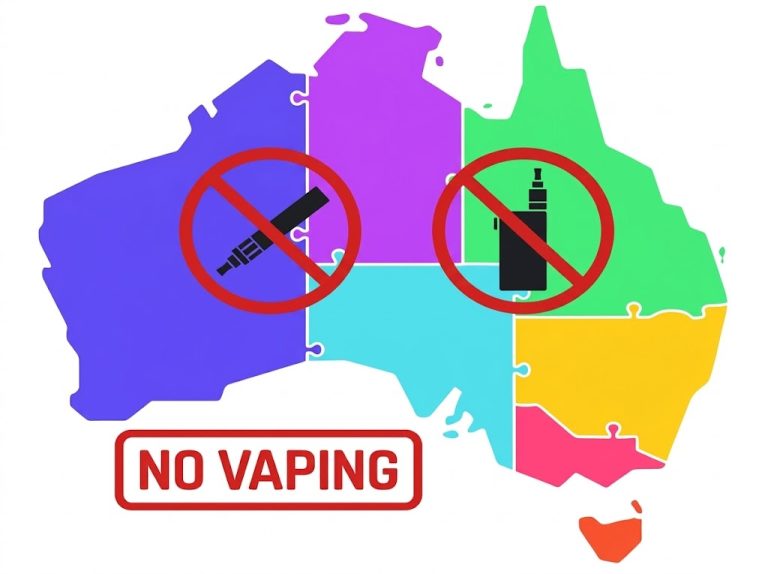
Australia Vape Ban 2026: The Current State Explained Australia vape ban 2026 has reshaped the local vaping market, but it’s not the outright prohibition many adult vapers feared back in 2023. Three years after the original regulatory shake-up, the rules have settled into a more nuanced framework — and the good news for adult vapers